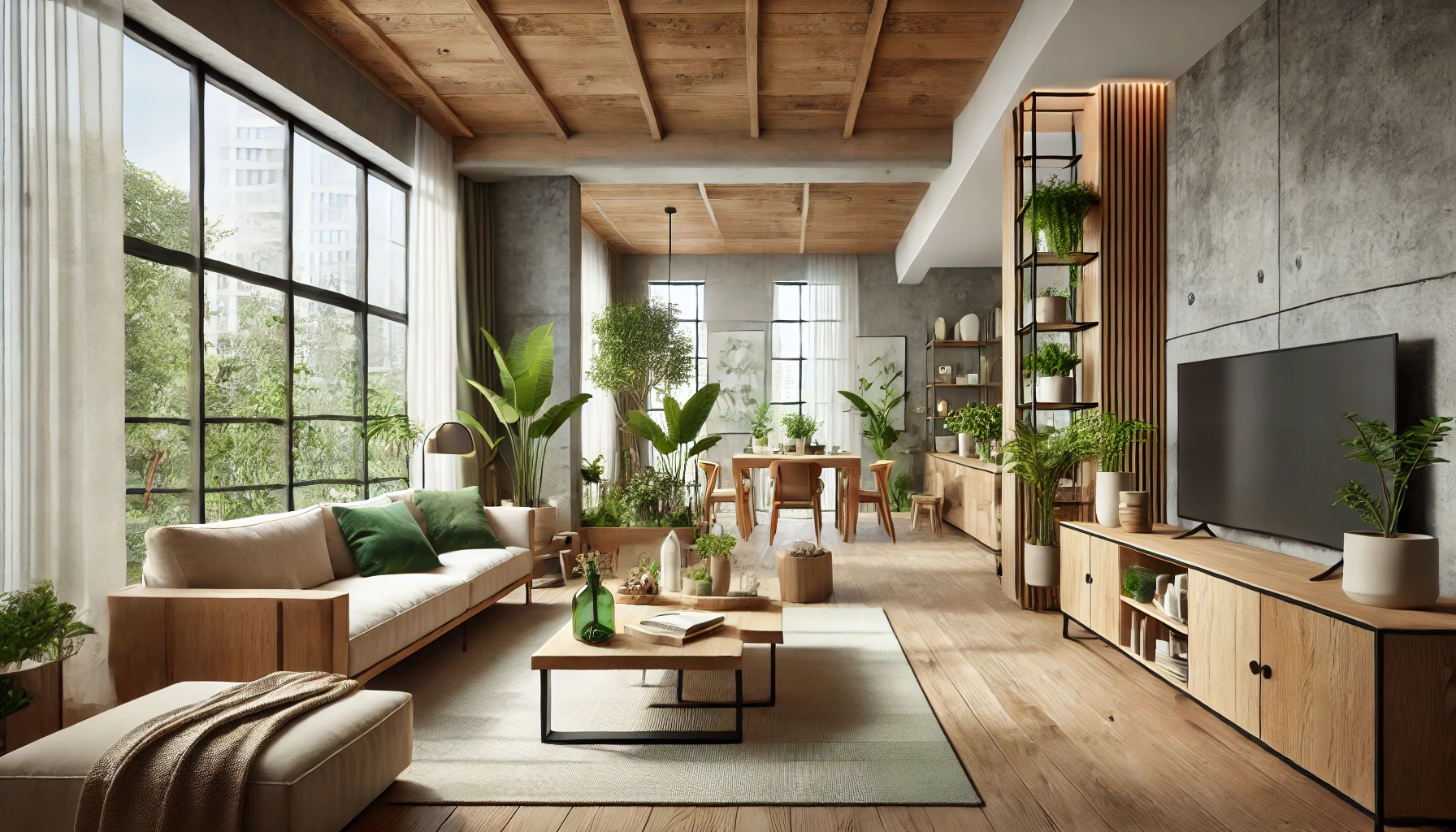
Sustainable Interior Design: Eco-Friendly Practices for a Greener Home
Creating an eco-friendly home involves thoughtful design choices that minimize environmental impact while promoting health and well-being. Here are some practical strategies to achieve a sustainable interior:
1. Choose Low-Impact Materials
Go for materials that are renewable, recycled, or have minimal environmental footprints. Examples include reclaimed wood, bamboo, cork, and recycled metal. These materials not only reduce resource consumption but also add unique character to your space.
2. Prioritize Energy Efficiency
Enhance energy efficiency by maximizing natural light through large windows and skylights, reducing the need for artificial lighting. Incorporate energy-efficient appliances and fixtures to further decrease energy consumption.
3. Invest in Modular Furniture
Modular furniture offers flexibility and longevity, allowing you to adapt your space to changing needs without the environmental cost of purchasing new items. Look for pieces made from sustainable materials to maximize eco-friendliness.
4. Embrace Minimalism
Adopting a minimalist approach reduces waste and promotes efficient use of resources. Focus on quality over quantity, selecting durable items that serve multiple purposes and have timeless appeal.
5. Improve Indoor Air Quality
Select non-toxic, low-VOC (volatile organic compounds) materials and finishes to enhance indoor air quality. Incorporate natural elements like plants to further purify the air and create a healthier living environment.
By implementing these strategies, you can create a sustainable interior that is both environmentally responsible and aesthetically pleasing. Remember, every small step towards sustainability contributes to a healthier planet and a more harmonious living space.

Insights, Inspiration & Expertise
A well-designed space is more than just aesthetics—it’s about feeling at home, maximizing functionality, and making a lasting impression.
schedule your
free call with us.
Schedule Your Free Consultation
dd.avif)
From breathtaking interiors to thoughtfully curated landscapes, our team is committed to excellence in every project. Based in Addis Ababa, we bring a unique blend of creativity, sustainability, and functionality to create spaces that truly work for you."